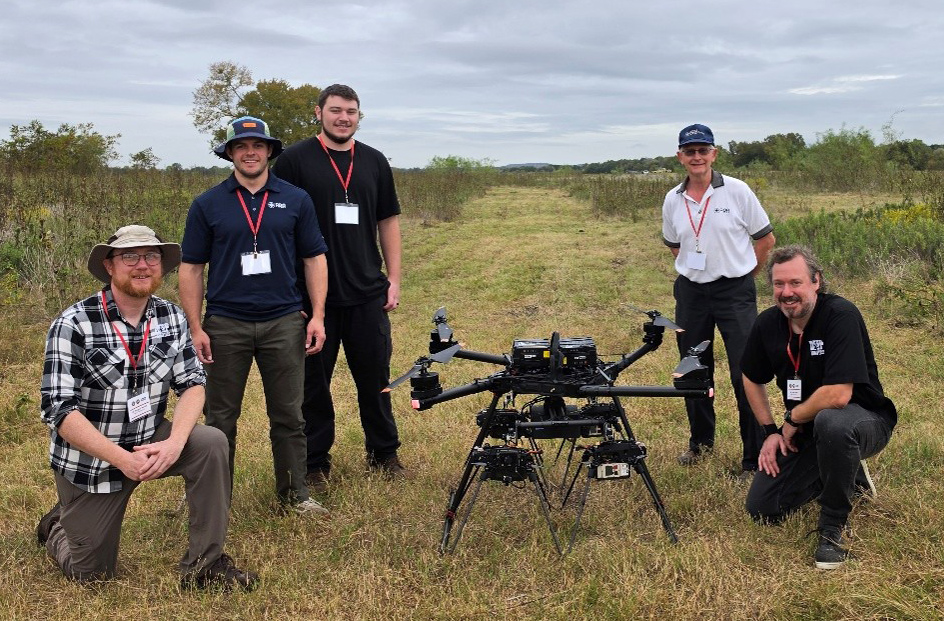
 As the U.S. Army explores new technologies to reduce risk for soldiers during minefield‑breaching operations, ARA’s autonomous landmine‑neutralization system demonstrated strong, reliable performance during a recent technology demonstration at Fort Hood.
Minefields remain one of the most dangerous obstacles for engineer units. Lt. Col. Phil Kistler of the 1st Cavalry Division Engineer Brigade said reducing soldier exposure is a top priority, noting that current breaching operations can carry casualty estimates as high as 50%.
During the event, ARA’s Havex drone system executed test flights smoothly and successfully neutralized a live mine during the final evaluation—conducted under rainy conditions. Soldiers and military leaders observed the system’s accurate charge placement, stable flight profile, and consistent performance, all critical to keeping personnel at a safe distance.
“We’re grateful for the opportunity to work alongside the Army in advancing safer and more impactful breaching technologies,” said Ed Moas, ARA Senior Vice President and manager of the Manufacturing & Robotics sector. “Demonstrations like this help ensure the solutions we develop support the execution of today’s real‑world missions and reflect ARA’s commitment to delivering innovative, cost‑effective, ready‑now capabilities that directly support the warfighter.”
ARA’s performance capped roughly ten months of rapid development, with engineers refining drone electronics, structural components, and precision‑landing software. The demonstration showcased the potential of unmanned systems to make future breaching operations significantly safer.
Soldiers on site expressed enthusiasm for the technology. Capt. Rachel Flowers of the 8th Engineer Battalion said the demonstrations offered valuable insight into how the Army is preparing engineers for future battlefields.
The Army will evaluate the systems further as it considers which technologies best enhance safety and effectiveness in minefield clearance.